Psychologist in Thessaloniki and online
A space for healing, understanding and personal growth.
Psychological support and counselling for adults, teenagers, couples and parents. In the centre of Thessaloniki and online. A lower fee for the first meeting.
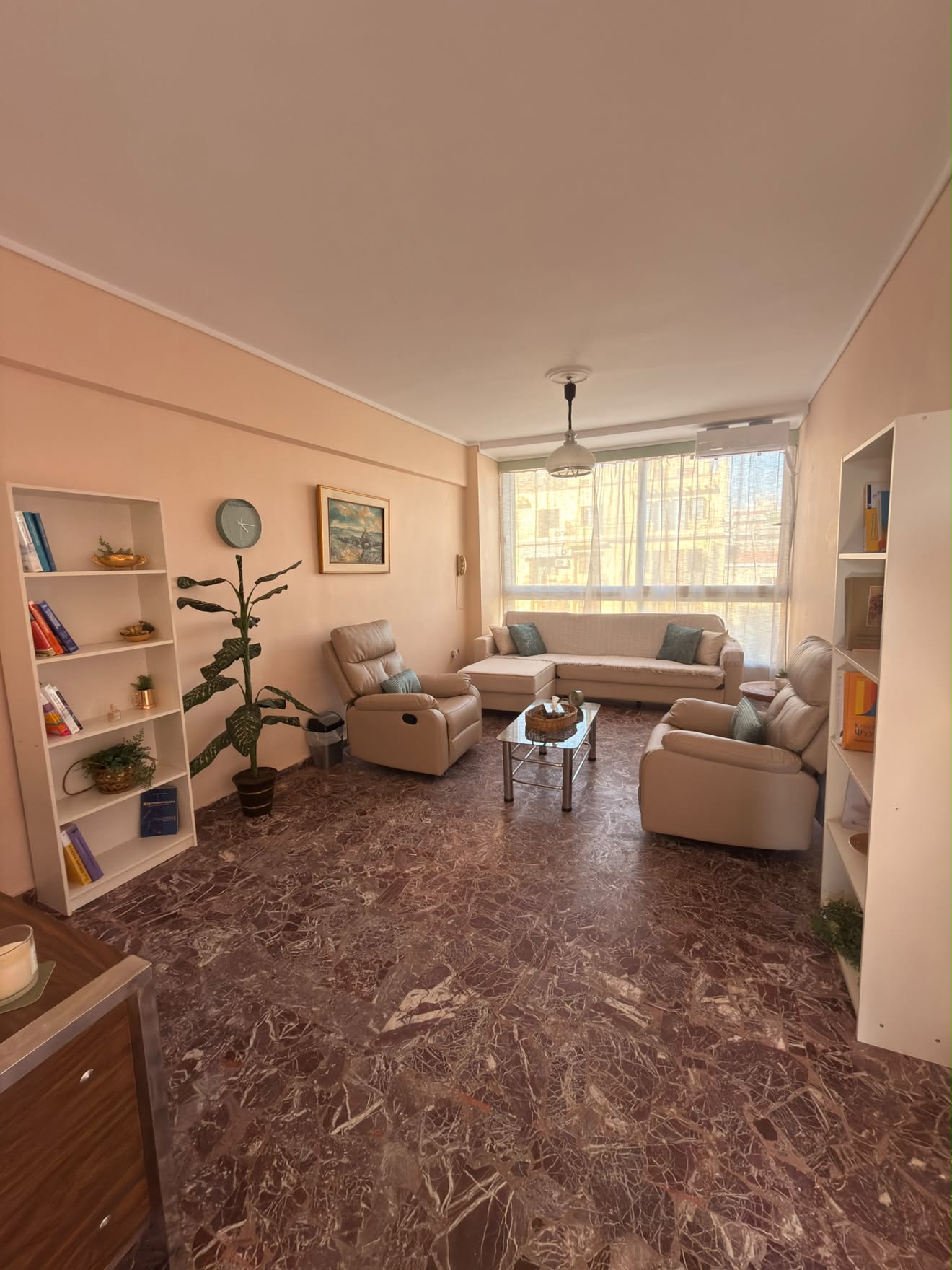

- In personEgnatia 30, 5th floor, in the centre of Thessaloniki.
- OnlineSessions by video call, wherever you are.
- ConfidentialityFull respect for the privacy of every session.
«Until you make the unconscious conscious, it will direct your life and you will call it fate.»
A space for understanding, acceptance and personal growth.
Mental health is an important part of our overall wellbeing. Sometimes the difficulties of everyday life, our relationships or our feelings can seem hard to manage. Seeking support can be a meaningful first step towards self-awareness and change.
In my practice, the aim is to create a safe and supportive setting where every person can express themselves freely, understand themselves better and look for new ways of handling their difficulties. With respect for the uniqueness and the needs of each person.
A few words about me
I am a psychologist, a graduate of the School of Psychology of the Aristotle University of Thessaloniki, licensed to practise.
As part of my continuing scientific and professional development, I am training in Cognitive Analytic Therapy (CAT) and in Cognitive Behavioural Therapy (CBT).
At the same time, I am attending a continuing education programme in Adult Psychopathology, aiming to deepen my understanding of mental disorders, their manifestations and the needs of the people who experience them. This training broadens my scientific knowledge and strengthens my clinical understanding, with the aim of providing responsible and personalised psychological support.
Also, I have attended training programmes in Child and Adolescent Psychopathology and in Child Psychology, deepening my knowledge of the psycho-emotional development, the needs and the difficulties that children and teenagers may face.
My approach
Cognitive Behavioural Therapy (CBT)
CBT focuses on the connection between our thoughts, feelings and behaviours. It helps to recognise patterns that may keep difficulties going and to develop more helpful ways of dealing with them.
«By understanding the patterns we repeat, we make room for new choices.»
Cognitive Analytic Therapy (CAT)
CAT focuses on understanding the repeating patterns in our relationships with ourselves and with others. Through a collaborative exploration of our experiences, it aims to recognise these patterns and to look for other ways of handling them.
- Without judgementWhatever you bring to the session, there is room for it.
- At your own paceThere is no right speed. We move in the way that suits you.
- In confidenceConfidentiality is the foundation of our work together.
- Grounded in scienceMethods with proven effectiveness.
The shared aim is a deeper understanding of personal difficulties and a stronger capacity for meaningful change.
Support should be within reach
Book an appointment- A lower fee for the first meetingWe get to know each other and talk about what is troubling you, at a reduced fee and with no obligation.
- Special rates for students and the unemployedAsk me when you get in touch and I will let you know.
What I work with
Tap a topic to see what it means and how therapy can help. The descriptions are for information only and are not a diagnosis.
Do not see what is troubling you? Get in touch. Every request is different and we will find together where to begin.
Two ways to meet
At the office
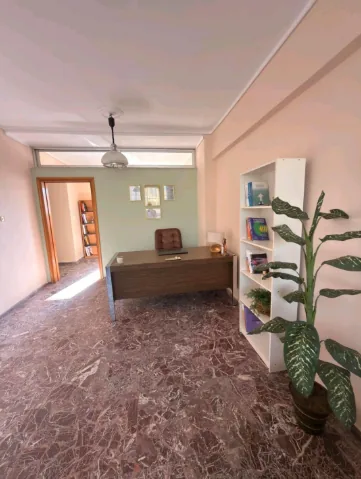
Egnatia 30, 5th floor, in the centre of Thessaloniki. A quiet, private space, just for you.
See the mapOnline
By video call, from your own space. Ideal if you live outside Thessaloniki, travel often or prefer the comfort of home.
How we begin
- 1
First contact
You call or write to me. Together we find a time that suits you.
- 2
A first meeting, at a lower fee
In the first session, which has a lower fee, we talk about what is troubling you and what you expect from therapy.
- 3
A shared plan
We set goals and how often we meet. The plan adapts as we go.
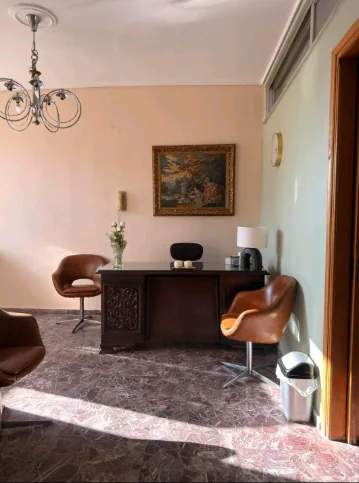
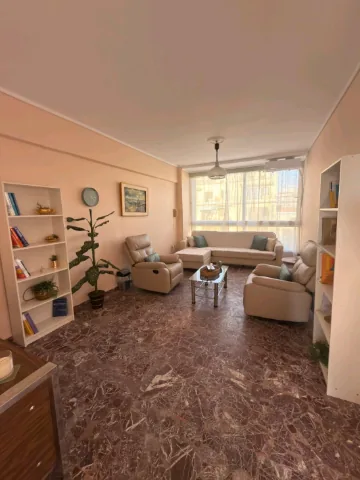
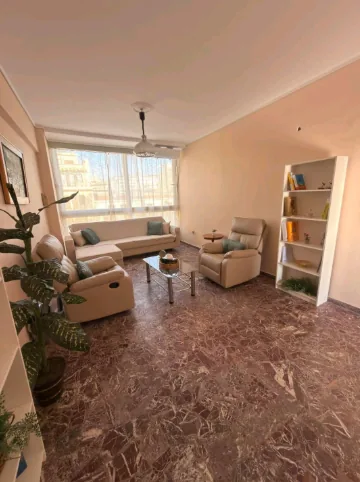
Psychologist’s office in Thessaloniki
Photos of the quiet, welcoming therapy space at 30 Egnatia Street in central Thessaloniki.
Frequently asked questions
If your question is not here, feel free to ask me.
How do I know if I need a psychologist?
You do not need to have reached your limit. If something weighs on you, keeps repeating or stops you from living the way you want, that is reason enough to talk to a professional.
What happens in the first session?
It is a meeting to get to know each other, at a lower fee. You tell me in your own words what brought you here, I explain how I work and we see if we are a good fit. There is no obligation to continue.
How much does a session cost?
The first meeting has a lower fee. Special rates apply for students and the unemployed. For the cost of further sessions, get in touch and I will let you know.
Is what I say confidential?
Yes. Confidentiality is the foundation of psychological support and I am bound by the code of ethics for psychologists. Exceptions exist only where the law requires them, to protect life.
How long does therapy last?
It depends on your request and your goals. Some issues need a few meetings, others need more time. We discuss it openly from the start and review it along the way.
Do you offer online sessions?
Yes, by video call. You need a quiet space where you will not be interrupted and a stable internet connection.
Where is the office?
At Egnatia 30, 5th floor, in the centre of Thessaloniki, near Dimokratias Square. If it is not convenient for you to come, sessions are also available online.
How do I book an appointment?
With a call or message to +30 698 689 3895, by email or through the contact form. Meetings are by appointment, Monday to Friday.
The first step is a conversation
Write to me or call me. I will reply as soon as I can.
- A lower fee for the first meeting
- Special rates for students and the unemployed
- Phone
- 698 689 3895
- Hours
- Monday to Friday, by appointment
This page is not an emergency service. If you are in immediate danger, call 112 or the Suicide Intervention Helpline 1018.